During a breakout, it’s easy to switch cleansers, add a product, or stop using another one in the same week. If irritation follows, it can be hard to tell what changed and when. Reviewing your routine step by step helps you describe what’s happening and bring specific questions to your appointment.
Contents
- What to notice when adult acne breakouts return
- Which changes in your habits to note when acne returns
- How to tell a recent breakout from older marks
- Common mistakes that make an adult acne routine harder to review
- What to record about each product in your routine
- How to put changes to your routine in order
- How to prepare for an adult acne appointment
- What to bring to a dermatology appointment for adult acne
- What to ask about treatment and follow-up
- Frequently asked questions about adult acne and skincare routines
Start by working out when the breakouts returned, what you were using, and what discomfort you noticed. A note on your phone will do. Separate what you saw on your skin, what you felt, and what changed in your routine.
What to notice when adult acne breakouts return
Note when you first saw pimples, where they appeared, and what happened next. If you don’t remember the exact day, an estimate such as “the first week of October” is enough. Say whether the breakout returned in the same area or appeared elsewhere on your face, chest, or back.
Describe the discomfort in your own words. “My cheeks burned right after I washed my face” tells the clinician more than “my skin got worse.” If a pimple also hurt when you touched it, record the two sensations separately so you can explain where and when each occurred.

Which changes in your habits to note when acne returns
When reviewing your skincare routine in Miami, consider changes in your daily activities. Maybe you started exercising outdoors, switched sunscreens, or began washing your face after coming home from the gym. Include any changes that happened around the time of the breakout.
You could write: “Since my schedule changed, I’ve also been washing my face after workouts.” If you already had pimples before the change, note that. Dates help put events in order, but timing alone doesn’t establish the cause of a breakout.
How to tell a recent breakout from older marks
You may notice new pimples and marks left by earlier breakouts at the same time. The Acne guide from the NHS, published in 2026, distinguishes between symptoms such as pimples or painful lumps and changes in skin color or texture that can remain afterward.
You could write: “Two tender pimples appeared along my jawline this week. I can still see a dark mark on my cheek from last month.” That’s enough to bring both observations to the appointment. If you’re unsure whether a change in color or texture is a spot or a scar, ask the clinician how they would assess it.
Common mistakes that make an adult acne routine harder to review
Trying several new products at once makes it harder to reconstruct what happened. If you switched cleansers on Monday, tried a new serum on Wednesday, and noticed burning on Friday, you have three useful details for your appointment. What you don’t yet know is whether the discomfort is related to either change.
Changing your entire routine after every breakout can also leave questions unanswered. Imagine the pimples returned on Saturday and you switched moisturizers on Sunday. Start with Saturday when preparing for your appointment: the breakout was already there before the switch. If your skin felt tight on Tuesday, record that as a separate event. This helps distinguish why you changed the product from what you noticed afterward.
Another common mistake is remembering the product but forgetting how you used it. “I applied it some nights” could mean twice a week or four nights in a row. Note any changes in frequency. Do the same if you first used it on a few pimples and later spread it over a larger area.
Two people may describe similar breakouts but arrive at their appointments with different histories, symptoms, and routines. That’s why an individual assessment matters, as explained in Estefano Isaias’s guide to understanding your skin before treating it.
What to record about each product in your routine
Write down the name, roughly when you started using it, how often you actually used it, where you applied it, and any discomfort you noticed. A photo of the packaging can help you find the exact name. Include products you stopped using if they were part of your routine when the breakout began.
If you only follow certain steps now and then, note what you do in a typical week. This helps explain which parts are difficult to keep up with. The guide to building a sustainable skincare routine suggests reviewing those steps in light of your schedule and what you notice about your skin.
If you’re following a prescribed treatment, record the instructions and how you’ve been able to follow them. If you have questions about the regimen or notice discomfort, check with the clinician who prescribed it before making changes on your own.

How to put changes to your routine in order
A short log may be enough to see what happened first. For example:
- Sunday: Pimples appeared along my jawline.
- Monday: I started using a new cleanser on my whole face, morning and night.
- Thursday: My cheeks felt tight after I washed my face.
Putting the events in order shows that the breakout began before you started using the new cleanser, while the tightness came later. That sequence helps you explain two separate concerns at your appointment without assuming they share a cause.
How to prepare for an adult acne appointment
Start with the question you most want answered: why breakouts keep coming back, what to do about recurring discomfort, or how to assess the marks left behind. If you have deep or painful lesions, or if your breakouts are leaving scars, mention this when making the appointment. The EuroGuiDerm guideline for the treatment of acne, updated in 2025, distinguishes between options based on the features and severity of the acne.
You could start by saying: “The breakouts returned a month ago, and lately my skin burns when I wash my face. What information would help you assess both?” If you also want to review your daily habits, the skincare resources can help you formulate more specific questions about your routine.
What to bring to a dermatology appointment for adult acne
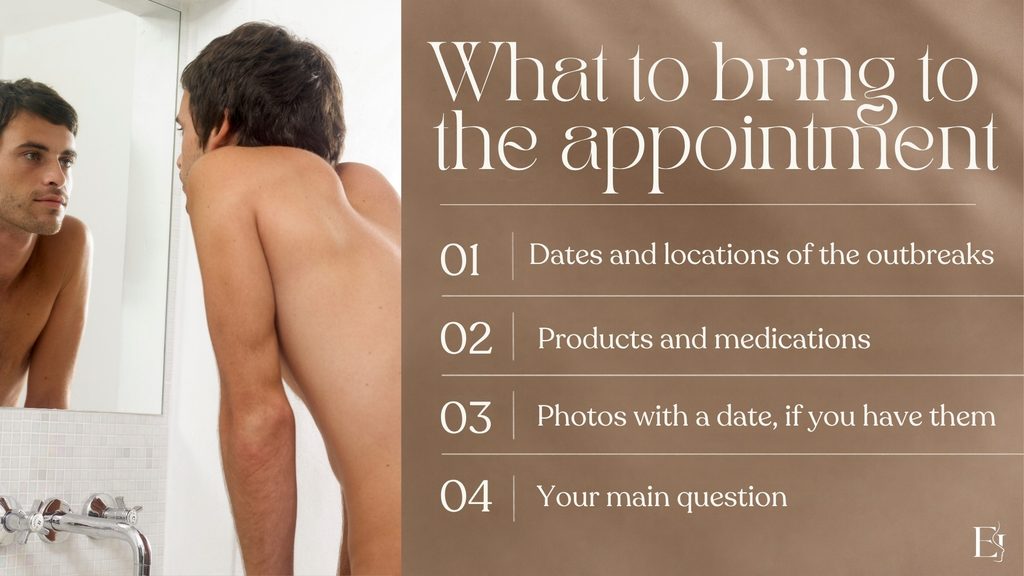
Use this checklist to gather the details that best explain what’s been happening:
- Timeline: When the breakouts returned, where they appeared, and how they changed.
- Discomfort: What you felt, where you felt it, and when.
- Products and medications: What you use, how often you use it, and what changed recently.
- Treatment history: What you’ve tried and how you remember your skin responding.
- Photos, if you have them: Choose a few dated photos that help show how your skin changed.
- Priority: Write down the question you want to address first.
What to ask about treatment and follow-up
Before the appointment ends, ask what the proposed option is meant to achieve, when your response will be assessed, and what changes you should report before your next visit. Also mention if a step is difficult because of your schedule, how a product feels, or uncertainty about when to apply it.
The Acne vulgaris: management guideline from NICE notes that some benefits may take six to eight weeks to become noticeable and recommends reviewing initial treatment at twelve weeks. Ask what timeline applies to you and whom to contact if you notice discomfort before that review.
Frequently asked questions about adult acne and skincare routines
What should I bring if I don’t remember when the breakout started?
Bring an approximate date and the details you do remember: where it appeared, how it changed, and what you were using. Dated photos or a product purchase history can help you put events in order.
How do I explain that I changed several products in the same week?
List them in the order you started or stopped using them. Then note when the pimples or discomfort appeared. If you don’t remember the exact order, indicate which dates are approximate.
Do I have to wait for another breakout to make an appointment?
You can make an appointment even if the breakout has improved. Before your next visit, write down when the breakouts returned, which products you changed, and what question you want answered first.