Choosing a product or considering an aesthetic treatment requires first understanding what the skin needs. Its appearance, the sensations it produces, and the way it responds to care provide information that should be considered together before making decisions. An individual assessment helps organize this process and establish priorities.
Contents
For Estéfano Isaías, understanding the skin’s particular needs is the starting point for care. Reviewing habits and defining expectations helps establish specific goals. It also makes it possible to recognize when a concern requires a medical assessment before addressing its aesthetic aspects.
What an individual skin assessment offers
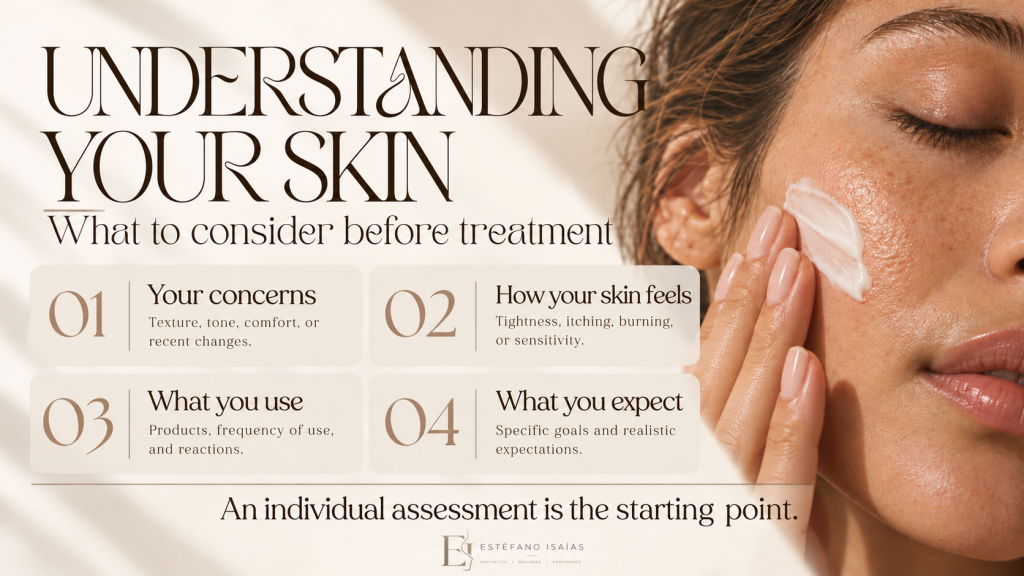
An assessment brings together information about the condition of the skin and the person’s concerns. A description such as dull skin may refer to differences in tone, uneven texture, or a feeling of dryness. Clarifying what that expression means helps guide the conversation.
Observing visible characteristics is one part of the process. It is also important to understand when changes began, which products are being used, and how the skin has responded to previous care.
Connecting what is visible with what is felt
A photograph may show redness or changes in texture, but it cannot capture every sensation. According to the expert study from the International Forum for the Study of Itch, published in 2017, sensitive skin may experience burning, itching, or stinging in response to normally tolerated stimuli, even when its appearance seems normal.
Asking what the person feels, when it happens, and which stimuli trigger it helps complete the picture. Listening to the person’s experience is therefore part of understanding their skin and addressing concerns that an image cannot explain.
Understanding the limitations of common categories
The terms dry, oily, and combination provide an initial point of reference. However, they do not summarize every factor that may influence a decision about care.
Two people who describe their skin as oily may have different concerns. One may want to manage shine, while the other experiences discomfort after using certain cosmetics. An assessment needs to consider these differences and prevent a broad category from determining every decision.
Reviewing the routine and relevant history
Understanding the skin also requires knowing what is applied to it. Products, frequency of use, and recent changes are all pieces of information worth organizing.
Preparing a list of cosmetics and explaining how they are used makes the conversation easier. Previous reactions and medications should also be discussed when seeking a professional assessment.
Identifying changes before expanding the routine
If discomfort appears after a routine has changed, it is useful to explain what changed and when. Introducing several products at once can make this harder to reconstruct, because it becomes more difficult to identify what happened after each addition.
Recording these circumstances helps prepare questions. It does not allow someone to diagnose themselves, but it provides context so the appropriate professional can interpret the situation and consider the next steps.
Considering formulations and conditions of use
When reviewing a routine, it is useful to know which moisturizer is used, how often, and how the skin responds. A randomized trial by Samadi and colleagues, published in 2020 and involving researchers from Tehran University of Medical Sciences, examined skin barrier function after single and repeated applications of four types of moisturizers.
These variables help frame more precise questions during an assessment: what the person wants to improve, how the product is being used, and which changes have been observed. The choice needs to address a specific goal and take individual experience into account.
Considering the environment and everyday habits
Decisions about care need to fit each person’s daily life. Time spent outdoors, regular activities, and the ability to maintain a routine are all part of that context.
In Miami, asking about sun exposure helps connect the conversation to specific habits. Living in the same city does not mean spending the same amount of time in the sun or having the same needs.
Considering sun protection as part of care
When concerns focus on sun-related changes, it is useful to review exposure and protection habits. According to the randomized trial by Hughes and colleagues, published in 2013, the group assigned to daily sunscreen use showed less progression in measured skin aging than the group using sunscreen at their discretion. The research included 903 adults in Australia and a follow-up period of four and a half years.
Including this topic in an assessment creates an opportunity to discuss everyday care and expectations. Preventing further damage and addressing existing changes are different goals. Understanding this distinction helps place sun protection within a broader approach to care.
Developing a routine that can be maintained
A skincare plan needs to consider schedules, preferences, and practical difficulties. Understanding the purpose of each step and how to organize it makes it easier to follow the guidance provided.
It also helps prepare more specific questions when a routine is difficult to maintain or its goals are unclear. A clear conversation can help identify these difficulties before adding new steps.
Defining expectations before considering a treatment
An assessment includes discussing what the person hopes to improve. General expressions such as rejuvenation or better skin need to be made more specific before options and limitations can be discussed.
Setting realistic expectations helps people understand that a decision may involve time, follow-up, and uncertainty. When a procedure is being considered, the appropriately licensed professional is responsible for explaining its suitability, alternatives, and risks.
Turning a concern into a clear goal
Someone who wants to improve their facial appearance may be thinking about skin tone, texture, or a particular area. Identifying the priority makes it possible to ask more precise questions.
It is also useful to discuss what change would feel satisfactory. Images of other people may help explain a preference, but they do not determine which outcome is appropriate or achievable in another case.
Addressing questions before moving forward
An informed conversation allows people to ask what is being proposed, why, and what follow-up it requires. It is also important to understand which uncertainties remain and which alternatives can be considered.
Having time to understand the answers makes it easier to participate in the decision. Clarity should accompany the process from the beginning, especially when there are expectations of rapid changes or questions about results.

Monitoring changes and recognizing when to seek advice
Follow-up makes it possible to review changes and difficulties. A simple record of products, sensations, and dates can help explain how things have developed during a consultation.
Photographs taken with similar lighting and framing can support that conversation. However, they do not replace an examination or allow every sign and symptom to be interpreted on their own.
Distinguishing an aesthetic concern from a medical need
A skin lesion that changes, bleeds, or does not heal, or persistent discomfort, warrants professional assessment. Recognizing these situations helps prioritize the appropriate care.
Understanding before treating means gathering information and recognizing its limitations. An individual assessment helps people express concerns, organize questions, and make decisions with greater clarity while keeping expectations appropriate to each situation.
FAQ about individual skin assessment
Because an assessment helps identify concerns, relevant history, and habits before a decision is made. It also helps recognize when a medical assessment is needed and establish specific goals.
Not necessarily. A category such as oily skin does not summarize symptoms, history, or expectations. Guidance should take individual circumstances into account.
A list of products and medications, previous reactions, and recent changes. It is also useful to explain when discomfort began and what the person hopes to improve.
No. It supports more informed decisions, but it does not eliminate uncertainty or guarantee a particular response. Results depend on the individual case and the intervention being considered.
No. It may provide visual information, but it does not capture every symptom or the person’s history. A professional assessment allows these elements to be interpreted within the context of each individual situation.