Choosing an aesthetic procedure involves more than comparing technologies. Medical history, skin tone and expectations change the questions worth asking before making a decision. Understanding the purpose of a proposal, its limitations and the planned follow-up helps prepare for that conversation.
Contents
In Miami, Estefano Isaias’s communication places individual care, listening and natural-looking results at the heart of his aesthetic philosophy. This article explores that approach and brings together the questions worth answering before a procedure: who will perform it, what justifies the choice and how progress will be assessed.
Key takeaways
• One technology is not suitable for everyone. The indications for microneedling devices show why the device and its intended use must relate to the goal and each person’s skin history.
• Before deciding, clarify who will perform the procedure and what you can expect. The questions suggested by the AAD help you review experience with similar skin, risks, recovery and alternatives.
• Turn the proposal into a plan you can follow. A sustainable skincare routine helps organize daily steps; also ask when your response will be reviewed and whom to contact if discomfort develops.
Estefano Isaias’s background and approach
The information published on his webpage describes an interest in understanding the skin and connects his work with Miami. It also presents listening, individuality, and the thoughtful use of technology as elements of his philosophy.
These principles help explain his positioning. Attention to personal concerns and respect for individual features provide a framework for discussing aesthetics without turning a reference image into a promise of results.
From curiosity to specialization
In his personal introduction, Estefano Isaias describes curiosity about how the skin works as the starting point of his professional interest. This account helps explain the direction of his communication, although it does not replace documentation of training, licenses, or qualifications to perform specific procedures.
For someone seeking guidance, understanding an approach provides an initial introduction. Before undergoing an intervention, it is also helpful to verify who will perform it, what training they have, and what follow-up they provide. Clarity about these matters is part of an informed decision.
What a personalized aesthetic strategy means
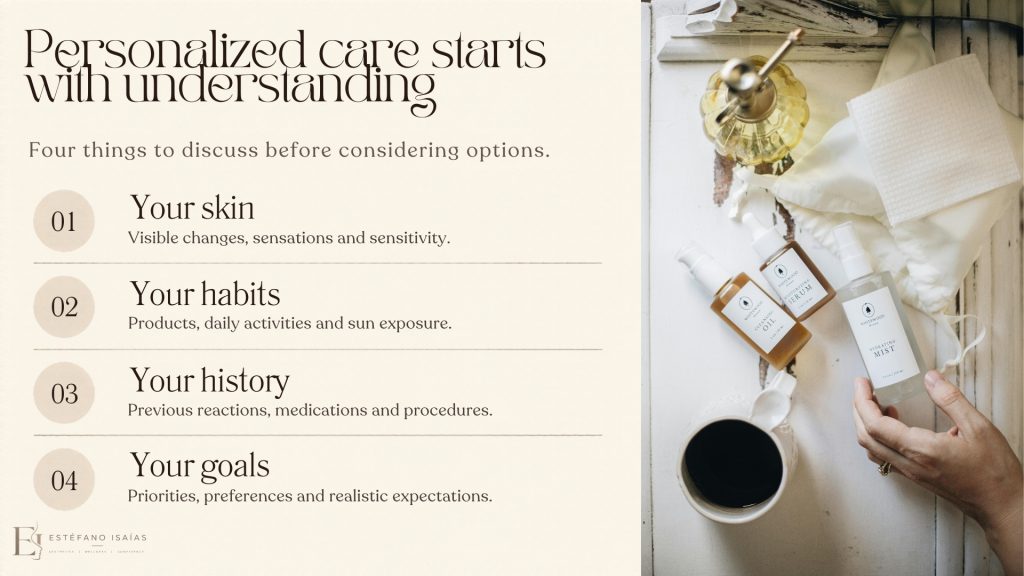
Personalization involves gathering relevant information and connecting it to a specific concern. Expressions such as improving the skin, rejuvenating, or restoring radiance need clarification: they may refer to tone, texture, dryness, or localized changes.
An individual strategy should make it possible to understand what needs to be addressed, why an option is being proposed, and how progress will be reviewed. It may also lead to postponing an intervention or seeking a medical assessment.
Observe the skin and listen to sensations
Visible appearance provides information, but it does not explain the entire experience. Someone may describe tightness, burning, or discomfort that a photograph cannot capture.
That is why it is helpful to ask when changes began, whether they are constant, and what circumstances accompany them. Listening to these answers helps prepare for an assessment and prevents the conversation from being reduced to a general category such as dry, oily, or combination skin.
Review habits, history, and products
The cosmetics used, application frequency, and previous reactions are part of the context. Medications and relevant medical history should also be disclosed when seeking a professional assessment.
Preparing a list makes that conversation easier. If several products have recently been introduced, noting dates and sensations may help reconstruct what happened. Recording information provides context, although it does not allow someone to identify the cause of a skin change on their own.
Consider sun exposure in Miami
Everyday activities matter too. Working outdoors, driving for extended periods, or playing sports creates different circumstances that should be discussed during an assessment.
A survey by the American Academy of Dermatology, published on May 6, 2025, found that 73% of the adults surveyed used products or procedures to prevent premature aging, while 56% used sunscreen regularly. These self-reported habits reveal a gap between concern and everyday protection.
Natural-looking results and gradual progress
Natural-looking results need to be translated into understandable goals. For one person, this may mean preserving their features; for another, addressing a localized concern without seeking an extensive change.
Clarifying these preferences makes it possible to discuss possibilities and limitations. Photographs of other people may help explain a preference, but they do not establish what is achievable on another face or how another person’s skin will respond.
More procedures do not mean better results
The number of interventions does not demonstrate that a proposal is better suited to someone’s needs. Each addition requires a rationale connected to the goal, individual characteristics, and the relevant assessment.
It is also helpful to ask what combining options contributes and what uncertainties it introduces. A clearly explained recommendation should make the purpose of each decision understandable, including the possibility of maintaining existing care, waiting, or reconsidering the plan.
Give follow-up a clear purpose
Gradual progress requires review points. It is helpful to know which changes will be observed, when they will be assessed, and whom to contact if difficulties arise.
Photographs taken under similar conditions can support follow-up, but they need to be interpreted alongside sensations and an examination when appropriate. Comparing isolated images does not, on its own, allow every effect of an intervention to be assessed.
Aesthetic technology with a purpose
Interest in new technologies should be accompanied by questions about their usefulness. Knowing a device’s commercial name provides little information unless its intended purpose and limitations are explained.
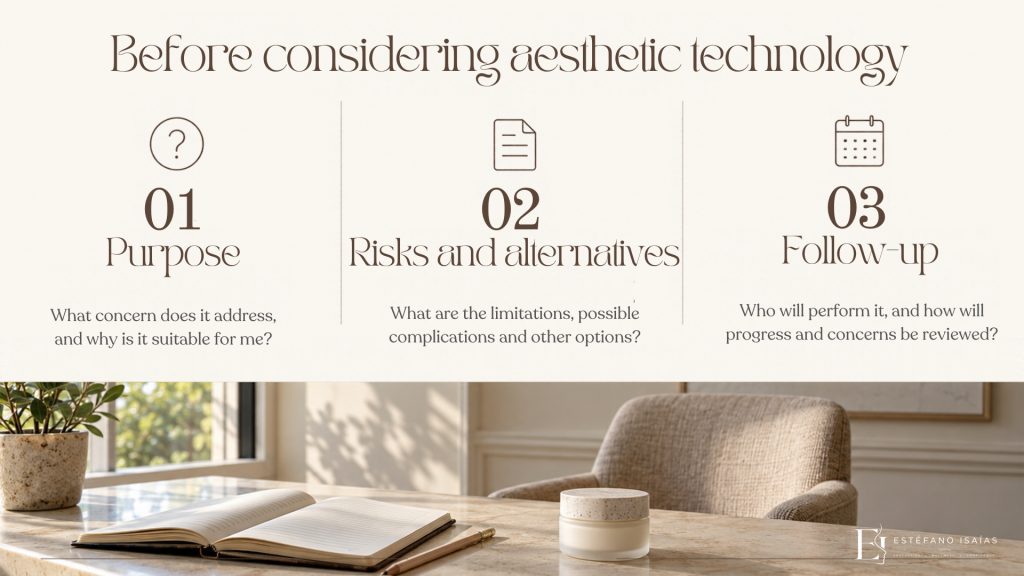
Before considering a procedure, it is helpful to ask about the device, its intended use, the experience of the person operating it, and aftercare. Selection needs to respond to an individual indication.
Understand benefits and risks
In a safety communication issued on October 15, 2025, the FDA reported serious complications associated with certain uses of radiofrequency microneedling devices, including burns, scarring, and nerve damage. The warning concerns that technology and certain uses; it does not describe all aesthetic procedures in the same way.
This example shows why the conversation must include specific risks. Innovation needs to be accompanied by understandable information and an appropriate assessment, particularly when an intervention acts on tissue.
Skin care topics and resources
Estefano Isaias’s content explores topics related to routines, sun exposure, acne, visible aging, and aesthetic technology. These readings can help organize concerns before a professional conversation.
Routines, moisturizing, and visible aging
In its official resource reviewed on February 11, 2025, the National Institute on Aging explains that skin changes with age and outlines measures for addressing dryness, such as using moisturizers and avoiding very hot water. It also considers environmental factors and everyday habits.
These guidelines help place everyday care within a broader conversation. Further reading on skin care provides a starting point for preparing questions about individual needs and consistency.
Acne, dark spots, and lasers
Breakouts, marks, and pigmentation changes represent different concerns. Identifying what someone wants to discuss helps prevent them from being grouped under a single expectation.
When reading about lasers, it is helpful to distinguish the procedure’s purpose and the individual circumstances involved. Learning about a technology can help someone become familiar with relevant questions, but it does not determine candidacy or replace the appropriate assessment.
When to seek a medical assessment
An aesthetic concern may coincide with a healthcare need. Lesions that change, bleed, or do not heal, as well as persistent discomfort, require professional assessment. Seeking advice is also appropriate when a skin change causes uncertainty.
Aesthetic education helps explain terms and prepare for conversations. Diagnosis and the selection of medical treatments require assessment by licensed healthcare professionals. Recognizing that boundary helps prioritize the care each situation needs.
FAQ about Estefano Isaias and advanced aesthetics in Miami
The AAD recommends asking about experience with people of a similar skin tone, skin type and age. This allows for a more specific conversation than a total procedure count: what results can be expected, which risks have been considered and how follow-up is planned.
On October 15, 2025, the FDA reported notifications of serious complications with certain uses, including burns, scarring and nerve damage. Its assessment was still ongoing in that communication. The warning provides a reason to ask about risks and the professional’s training; it does not justify attributing the same risk profile to all advanced aesthetic procedures.
Because previous aesthetic treatments also form part of the assessment. When you know them, bring the name of the procedure or product, the area treated and the approximate date, especially if injections or implants were involved. The AAD recommends sharing this history before receiving fillers; an effect no longer being visible does not mean you can decide on your own that the information is irrelevant.
Ask which decisions change because of your history, skin or goal. A personalized proposal should be able to justify each component, its alternatives and its limitations. The AAD recommends asking whether the procedure can deliver the desired result, taking skin condition, age and health into account. That explanation provides more information than calling a package “personalized.”